

Report a near miss in minutes
Utilize talk-to-text notes in English or Spanish, and attach photos with automatic time stamps in to accurately document near misses on your jobsite.
Go from reactive to proactive safety measures
Get visibility into the elements that contribute to an incident before it occurs.
See what HCSS can do for you
Schedule a demo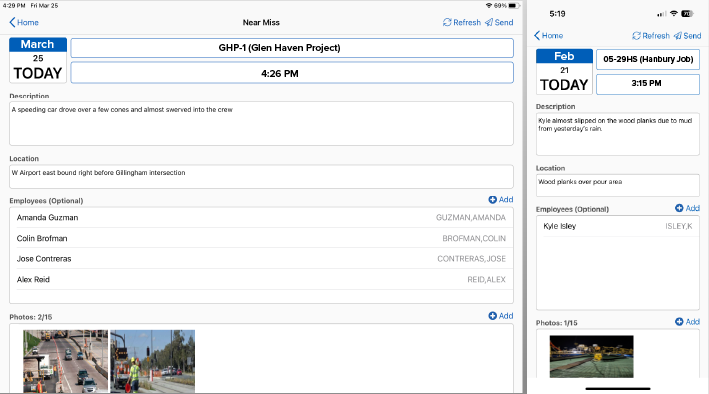
Ask our customers why they trust HeavyJob Safety as a near miss reporting solution






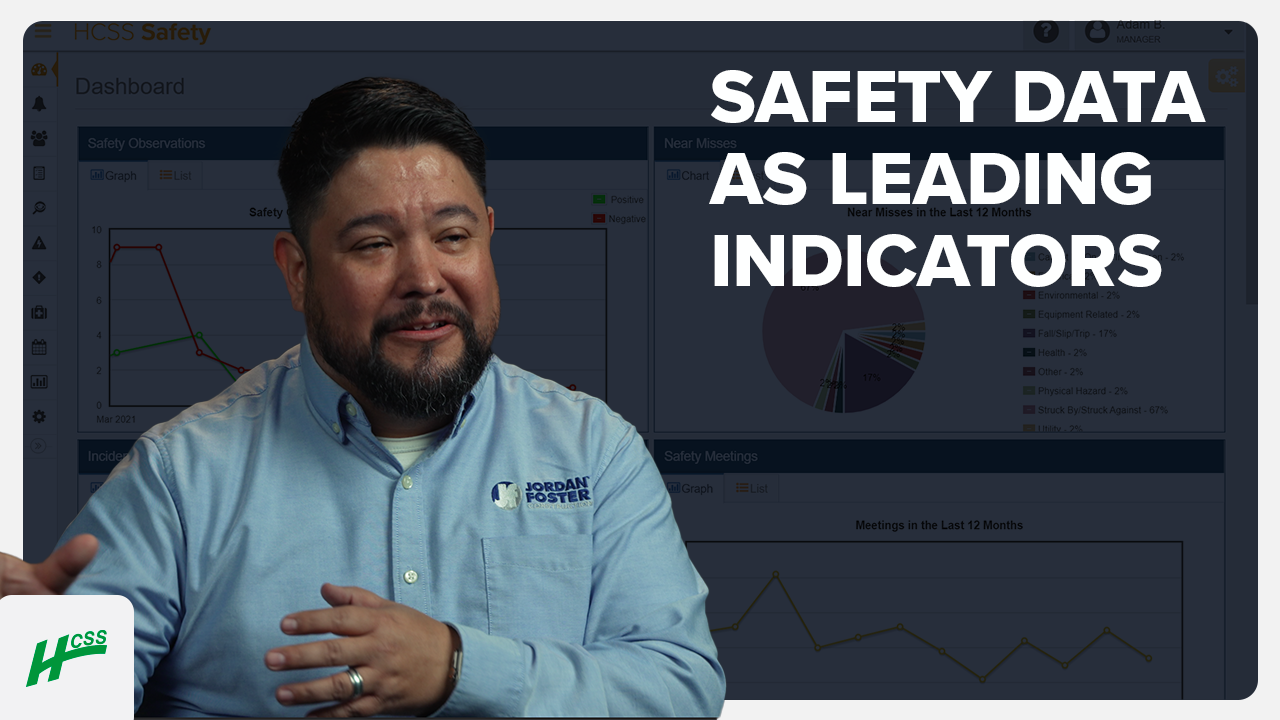
Our rates are below industry standards, and that doesn’t happen by accident.
- Damian Alvarez, Jordan Foster Construction
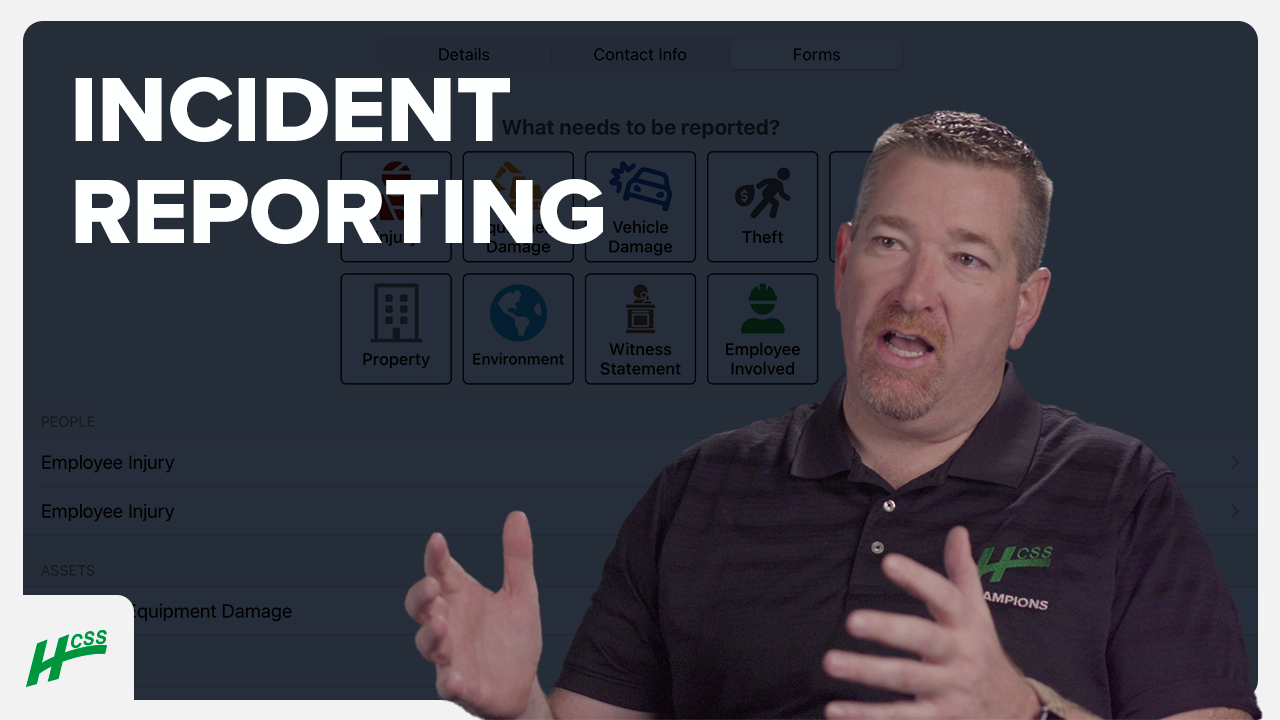
Since using HCSS, our EMR has dropped.
- Chris Albright, KE&G Construction
96%
lower reportable incident rate for HeavyJob Safety users than the industry average
1.5 million
inspections completed in 2024
9.0/10
average user rating
Always-on support.
Always human.
- Guided implementation to get your team up and running faster.
- Award-winning 24/7/365 support from our Sugar Land, TX office.
- Dedicated Customer Success rep to guide you beyond go-live.
- Ongoing training through HCSS Academy and HCSS community.
Protect your people and your productivity
Step 1
Share your business headaches
After submitting a demo request form, an HCSS expert will follow up with you by the end of the next business day to discuss your business needs and requirements.
Step 2
See HCSS in action
Then, we’ll walk you through a demo tailored to specific HCSS solutions that can help solve your current business problems.
Step 3
Get up and running in days
Finally, you’ll be assigned a dedicated implementation specialist who will manage your implementation from start to finish and ensure project completion.
Frequently asked questions
What is near miss reporting in construction safety?
Near miss reporting is the process of documenting unplanned events that did not result in injury, illness, or damage, but had the potential to do so. In construction safety, these are often referred to as close calls. HeavyJob Safety allows workers and supervisors to record these occurrences instantly. By capturing the details of a near miss, such as a misplaced trench shield or a backing vehicle that nearly struck a laborer, contractors can analyze what happened before a similar situation results in a recordable incident.
Why is near miss reporting important for preventing incidents?
Near miss reporting is the foundation of predictive safety. According to safety theories like the “Safety Triangle,” for every major injury, there are hundreds of near misses. By identifying and addressing these close calls, contractors can fix systemic issues such as poor site lighting or inadequate training before they lead to a tragedy. High-performing safety cultures use near-miss data to shift from reactive management to a proactive stance, significantly lowering their Total Recordable Incident Rate (TRIR).
Can near miss reports be submitted from the field on mobile?
Yes. For near miss reporting to be effective, it must be easy for the field crew to complete. HeavyJob Safety allows any worker or foreman to submit a report directly from their smartphone or tablet. The interface is designed for speed, allowing users to snap a GPS-tagged photo, record a voice note, or select from pre-set hazard categories. This mobile-first approach ensures that close calls are documented the moment they happen, rather than being forgotten at the end of the shift.
Does the software automatically notify supervisors when a near miss is reported?
Absolutely. Speed is critical in hazard mitigation. HeavyJob Safety features automated alert workflows that instantly notify designated safety managers or supervisors via email or push notification whenever a near miss is submitted. This allows leadership to intervene immediately, potentially shutting down a dangerous activity or implementing an emergency safety briefing before the same hazard leads to an actual injury later in the day.
How does near miss reporting help identify safety trends and risks?
HeavyJob Safety transforms individual reports into safety business intelligence. By aggregating data across all projects, the software identifies recurring trends that might otherwise go unnoticed. For example, if multiple near misses involving blind spots are reported across three different jobsites, safety directors can identify a systemic equipment visibility issue. This data-driven approach allows for the implementation of targeted safety training or new equipment standards based on real field evidence rather than guesswork.
Can near misses be categorized by hazard type, equipment, or job site?
Yes. To ensure the data is actionable, HeavyJob Safety allows for granular categorization. Users can tag reports by:
- Hazard Type: Fall risk, electrical, struck-by, or trenching.
- Equipment: Specific machine IDs or classes (e.g., excavators vs. dump trucks).
- Location: Specific jobsites, sections, or even GPS coordinates. This categorization allows safety managers to filter data and identify whether risks are localized to a specific crew or are widespread across the entire company.
Can near miss reports trigger corrective actions or follow-up tasks?
A report is only useful if it leads to change. HeavyJob Safety allows you to link near miss reports directly to Corrective Action Tracking. Once a near miss is identified, a supervisor can assign a follow-up task such as “Repair guardrail” or “Re-train crew on backing procedures” to a specific team member with a set due date. The software tracks the status of these actions, ensuring that the loop is closed and the hazard is mitigated.
Didn’t get all of your questions answered?
Request info