

Go from a reactive to a proactive safety culture
Catch incidents before they happen by giving your team greater visibility into the jobsite.
Don’t let a language barrier get in the way
Your crew can choose between English and Spanish when creating a field observation report.
See what HCSS can do for you
Schedule a demo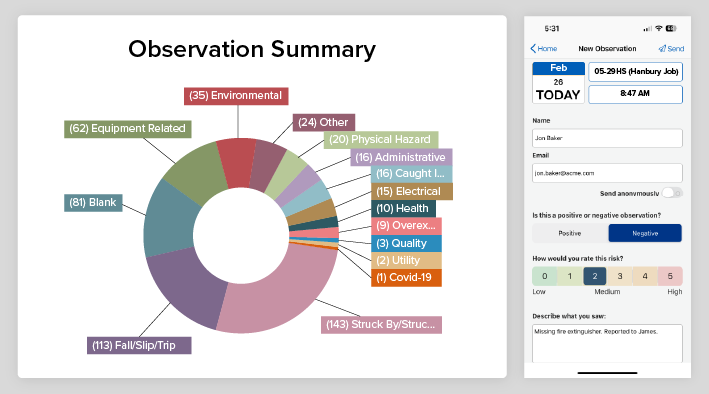
Ask our customers why they trust HeavyJob Safety to assign, report, and track safety observations



Our rates are below industry standards, and that doesn’t happen by accident.
- Damian Alvarez, Jordan Foster Construction
We’re a safer and more informed company than we’ve ever been.
- Scott Overby, McInnis Construction
96%
lower reportable incident rate for HeavyJob Safety users than the industry average
1.5 million
inspections completed in 2024
9.0/10
average user rating
Protect your people and your productivity
Step 1
Share your business headaches
After submitting a demo request form, an HCSS expert will follow up with you by the end of the next business day to discuss your business needs and requirements.
Step 2
See HCSS in action
Then, we’ll walk you through a demo tailored to specific HCSS solutions that can help solve your current business problems.
Step 3
Get up and running in days
Finally, you’ll be assigned a dedicated implementation specialist who will manage your implementation from start to finish and ensure project completion.
Frequently asked questions
What is safety observation software in construction?
Safety observation software is a digital tool used to record and track safe and unsafe behaviors or conditions on a jobsite in real-time. Unlike traditional audits, which are often periodic and formal, safety observation software like HeavyJob Safety encourages frequent, at-the-moment snapshots of the site. In the heavy civil industry, this software is essential for building a Behavior-Based Safety (BBS) program. It allows workers and supervisors to document what they see, whether it’s a crew member properly using a harness, or a poorly placed traffic cone, to create a data-driven picture of the project’s safety status.
What is the difference between a safety observation and a near miss?
While both are proactive safety indicators, they represent different stages of risk. A safety observation is the documentation of a condition or behavior before anything happens, such as noticing a worker isn’t wearing safety glasses (unsafe behavior) or seeing a well-maintained trench shield (positive observation). A near miss, is an event where an accident almost happened but resulted in no injury or damage. Safety observations are the most proactive form of data, allowing you to correct behaviors and conditions before they even escalate to a close call or near miss.
Can field crews submit safety observations from a mobile device?
Yes. For a safety observation program to be successful, it must be frictionless for the field. HeavyJob Safety allows any employee to submit an observation directly from their smartphone or tablet in seconds. Users can snap a photo, select the type of observation (Safe vs. Unsafe), and add a quick note. This mobile accessibility ensures that observations are captured throughout the day, providing a continuous stream of safety data rather than a single end-of-week report.
How are safety observations categorized and analyzed?
HeavyJob Safety allows you to categorize observations by hazard type, severity, and project location. Common categories in heavy civil include PPE compliance, equipment operation, fall protection, and housekeeping. Once submitted, this data is aggregated into a centralized dashboard where safety managers can analyze safe vs. unsafe ratios. This analysis helps leadership understand where the culture is strong and where additional training or resources are needed to shore up vulnerabilities.
Can safety observations be submitted anonymously?
Yes. To encourage a transparent and honest safety culture, HeavyJob Safety supports anonymous safety reporting. Many workers are hesitant to report unsafe conditions if they feel it might lead to friction with their peers or supervisors. By allowing for anonymous submissions, you remove the fear of reprisal ensuring that critical safety data reaches the office even when the observer wishes to remain unnamed.
Can safety observations be tracked across multiple crews or job sites?
Absolutely. Safety directors can monitor observation trends across the entire company, or drill down into specific regions, projects, or even individual crews. This allows you to identify high-performing crews who consistently log positive observations and high-risk projects where unsafe observations are trending upward, allowing for targeted intervention where it’s needed most.
How can observation trends help prevent incidents before they happen?
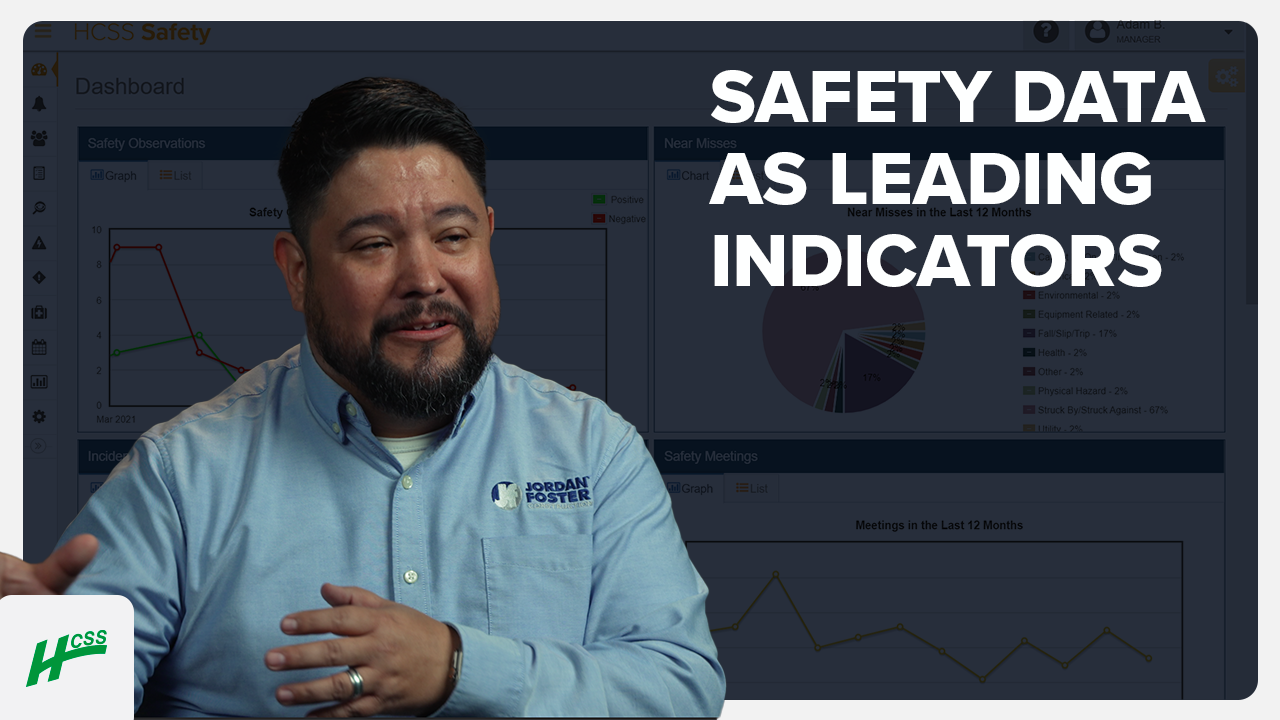
Observation trends act as a leading indicator for future incidents. By tracking the frequency of unsafe behaviors such as a recurring failure to use spotters for backing vehicles, safety managers can predict where the next accident is likely to occur. Instead of waiting for an injury to happen, you can use these trends to trigger immediate corrective actions, such as a specific toolbox talk on backing procedures. This data-driven approach allows you to lower the temperature of risk before it reaches a boiling point.
Didn’t get all of your questions answered?
Request info